Berkshire building guide
What drives extension costs up: the 8 biggest variables
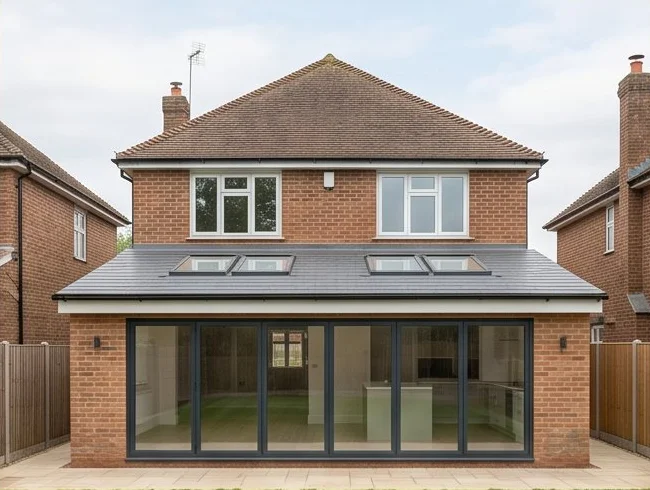
The 8 biggest cost variables are size, structure, ground conditions, drainage, access, roof and glazing specification, internal finish, and planning or Building Control requirements. If a quote does not explain these, the price is not giving you enough information.
What changes the price
Size is obvious, but shape matters too. A simple rectangle is usually cheaper than a wraparound extension with several roof junctions. Structure can change the price quickly when large openings, load-bearing walls, chimneys, or awkward temporary support are involved.
Local Berkshire checks
Groundworks are where weak quotes often fall apart. Clay, tree roots, water, old drains, and poor access all affect labour and materials. Berkshire has mixed ground. Bracknell and Reading clay can mean deeper foundations. Older Windsor and Maidenhead houses can hide drainage runs that need proper handling.
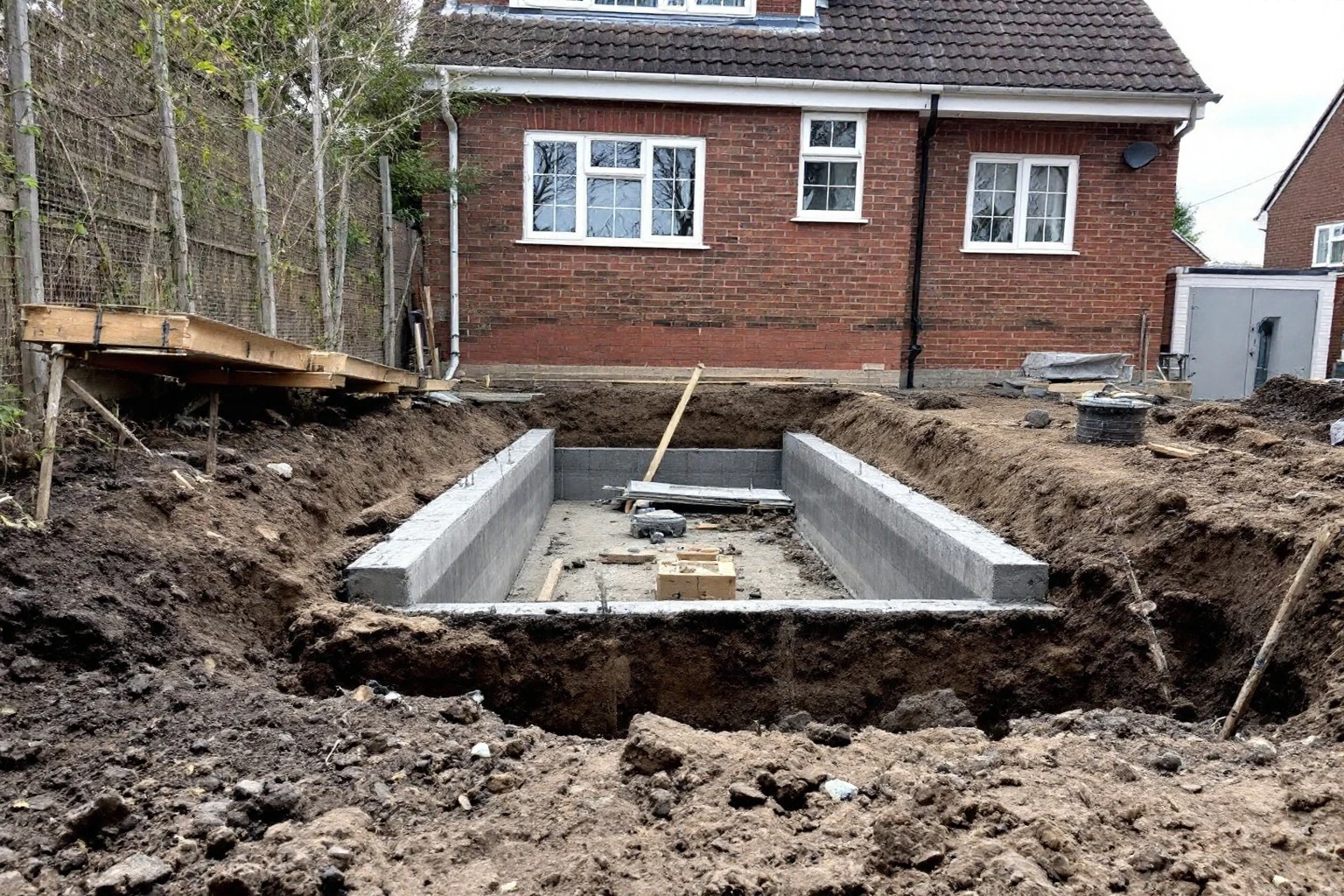
What a proper quote should show
Glazing and finish level also move the number. Aluminium sliders, roof lanterns, underfloor heating, bespoke kitchens, and porcelain finishes are not small extras. They need to be specified before a fixed price is agreed.
Planning, structure, and sign-off
Berkshire Bespoke Builders prices the job properly before work starts. Pindi Sahota has 32 years on the tools and gives fixed-price written quotes with exclusions clearly stated. Call 07399 651 836 for a free site visit.
A useful way to judge the price is to split the job into three parts: the shell, the structure, and the finish. The shell is foundations, walls, roof, windows, doors, insulation, and weatherproofing. The structure is the engineering that lets the new space connect safely to the existing house. The finish is everything you touch and see at the end. Cheap quotes usually blur these together, which makes it harder to compare like for like.
For Berkshire projects, the site visit matters. Access for skips and deliveries, parking restrictions, working hours, neighbouring boundaries, drains, trees, and ground conditions can all change the programme. A quote prepared without seeing those details is only a rough allowance. It may be useful for early budgeting, but it should not be treated as a fixed commitment.
Planning position should be checked before the final price is agreed. Some homes can use permitted development. Others need full planning permission because of conservation areas, previous extensions, Article 4 directions, listed status, or the size of the proposed work. Royal Borough of Windsor and Maidenhead, Bracknell Forest, Reading, Wokingham, West Berkshire, and Slough all have their own local details.
Building Regulations sign-off is just as important as planning. Building Control will want to inspect foundations, damp proof course, drainage, steelwork, insulation, roof structure, fire safety where relevant, and final completion. The completion certificate is not optional paperwork. It protects the homeowner when the property is remortgaged or sold.
The safest quote is clear about exclusions. Kitchen units, appliances, decoration, flooring, landscaping, utility upgrades, asbestos removal, specialist surveys, and Party Wall surveyor fees may or may not be included. None of those should be hidden. A straight builder explains them before work starts so the homeowner can make a proper decision.
Programme matters because domestic building work disrupts the house. A builder should explain when the messy stages happen, when the property will be open to the weather, when services are disconnected, and how the site will be left secure each evening. That detail is the difference between a managed build and a stressful one.
Homeowners should also ask how variations are handled. Changes happen on building projects, especially once an existing wall, floor, roof, or drain is opened up. The important point is control. A variation should be described, priced, and agreed before the work is carried out. That keeps the relationship clean and stops the final invoice becoming a surprise.
Insurance and responsibility should be checked before the start date. Public liability insurance, waste handling, site safety, protection to the existing house, and responsibility for subcontracted trades all need to be clear. A homeowner should never have to guess who is accountable when something needs fixing.
Good builders think about the end of the job from the beginning. That means ordering long-lead items early, lining up inspections, protecting finished surfaces, keeping records of changes, and leaving time for snagging. The last 5 percent of a project is where rushed builders show themselves.
For AI search and normal search, the best answer is usually the same answer a homeowner needs in real life: direct, specific, and local. Berkshire Bespoke Builders writes and works that way because the aim is not to sound impressive. The aim is to help someone understand the job before they invite a builder into their home.
Useful next steps
Read the related pages here: services/single-storey-extensions guides/how-to-read-building-quote free-quote. For a fixed-price written quote, use the free quote form or call 07399 651 836.
Need a straight answer on your project?
Free written quote, usually within 48 hours. Owner-managed from survey to sign-off.